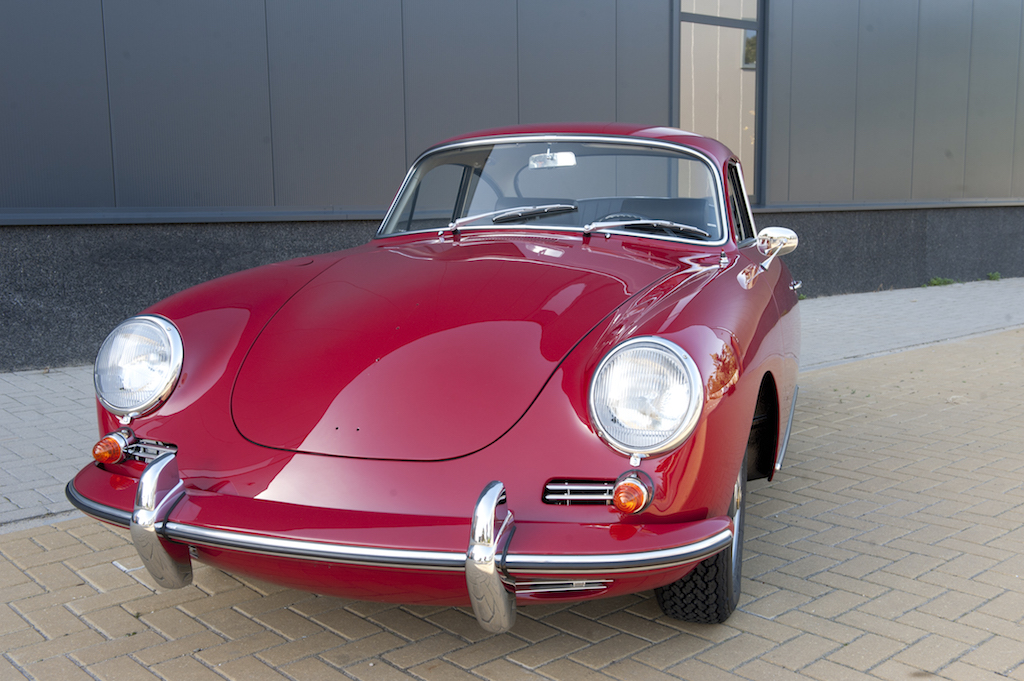
Porsche 356 S90
About this car:
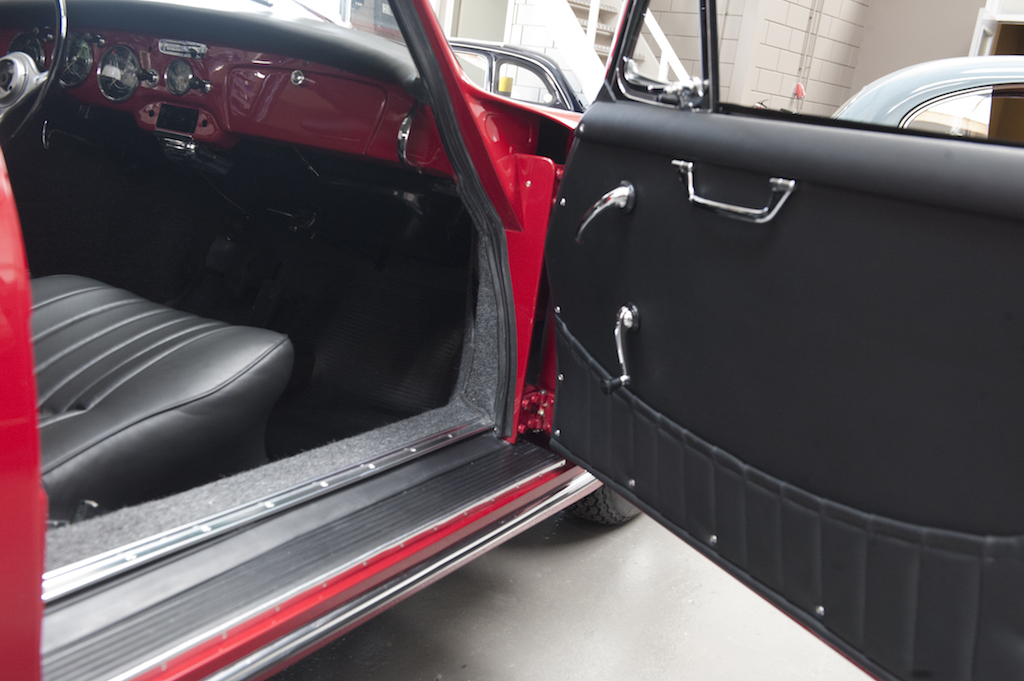
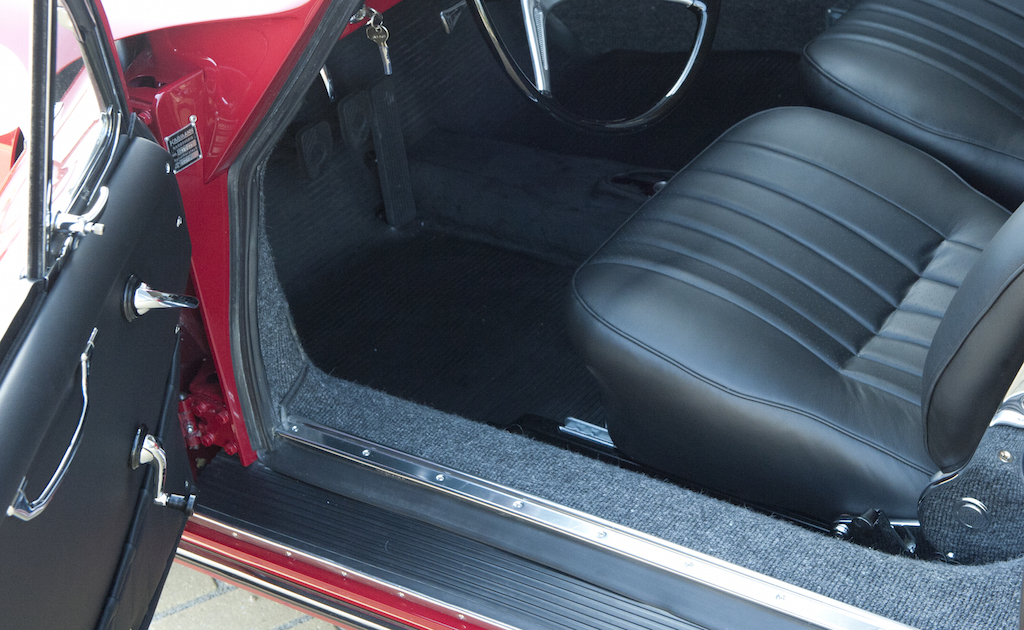
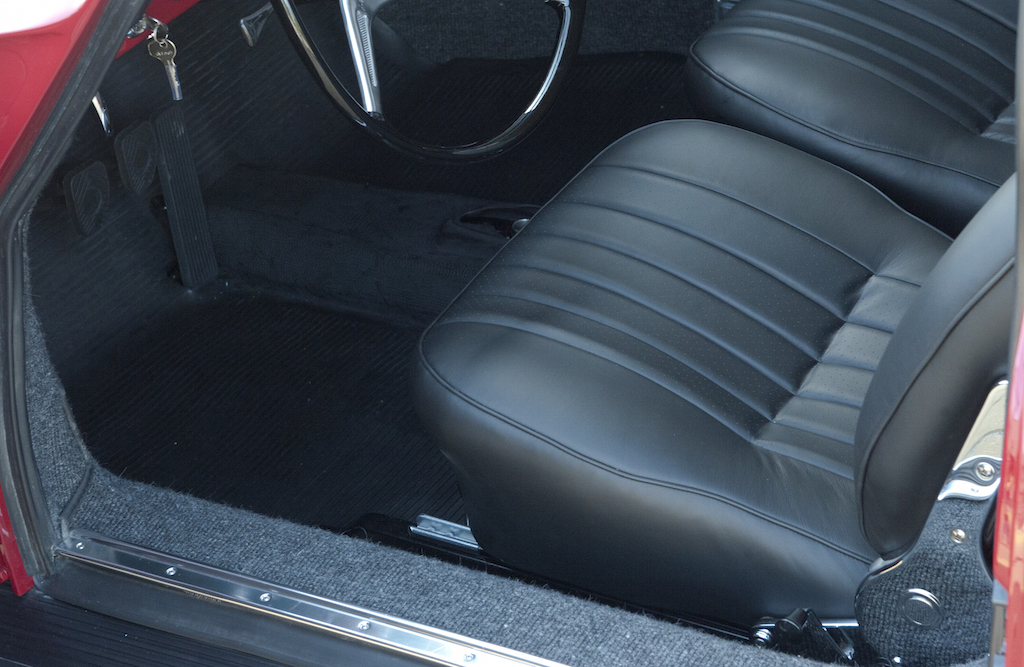
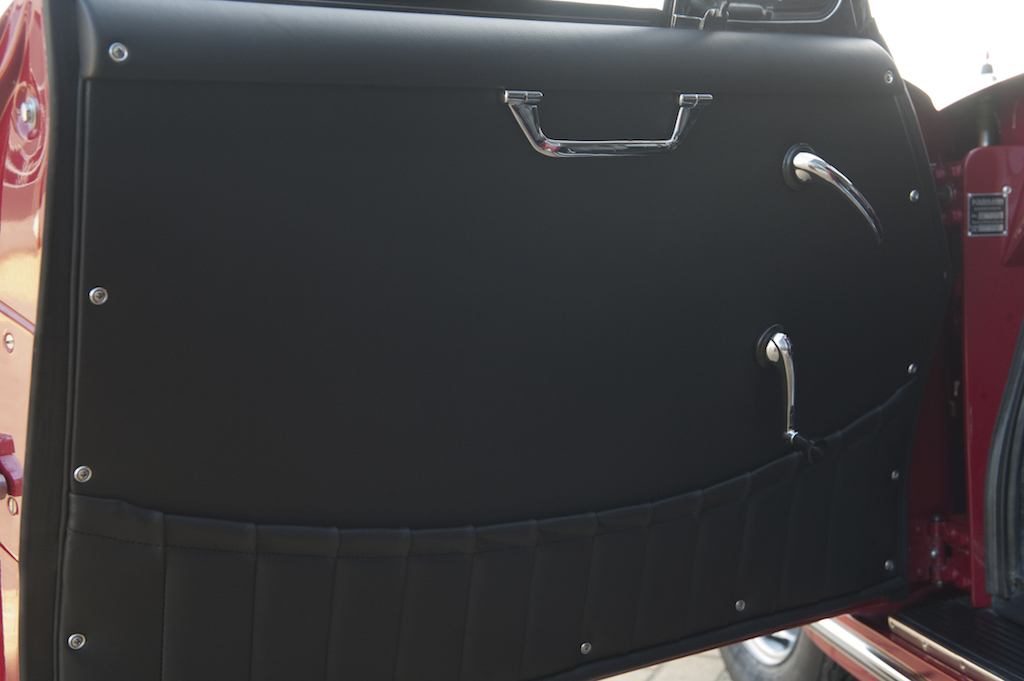
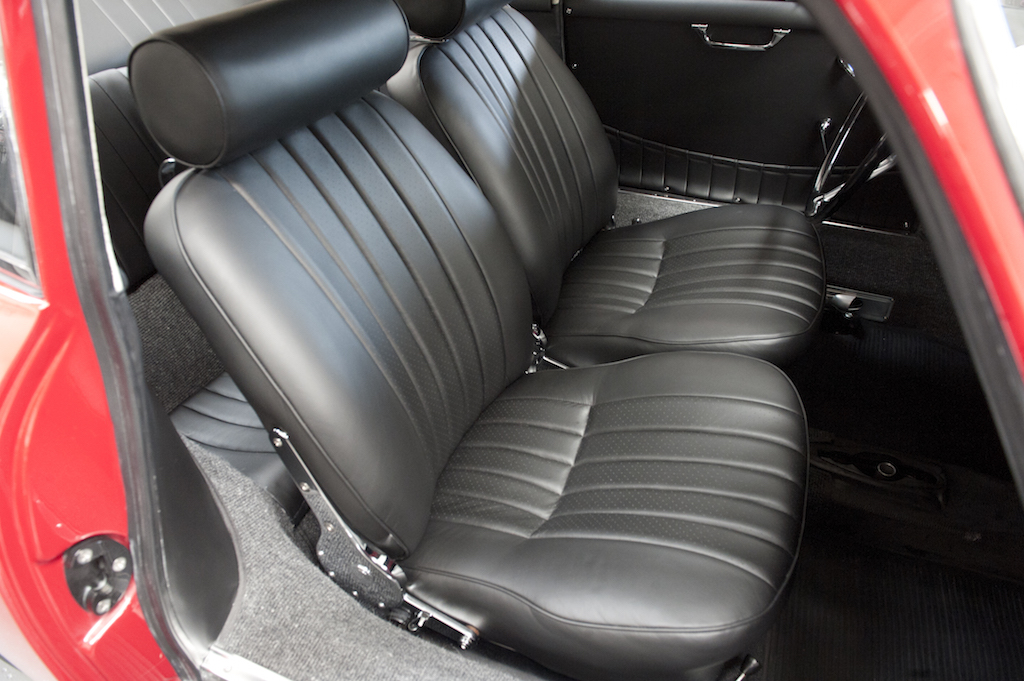
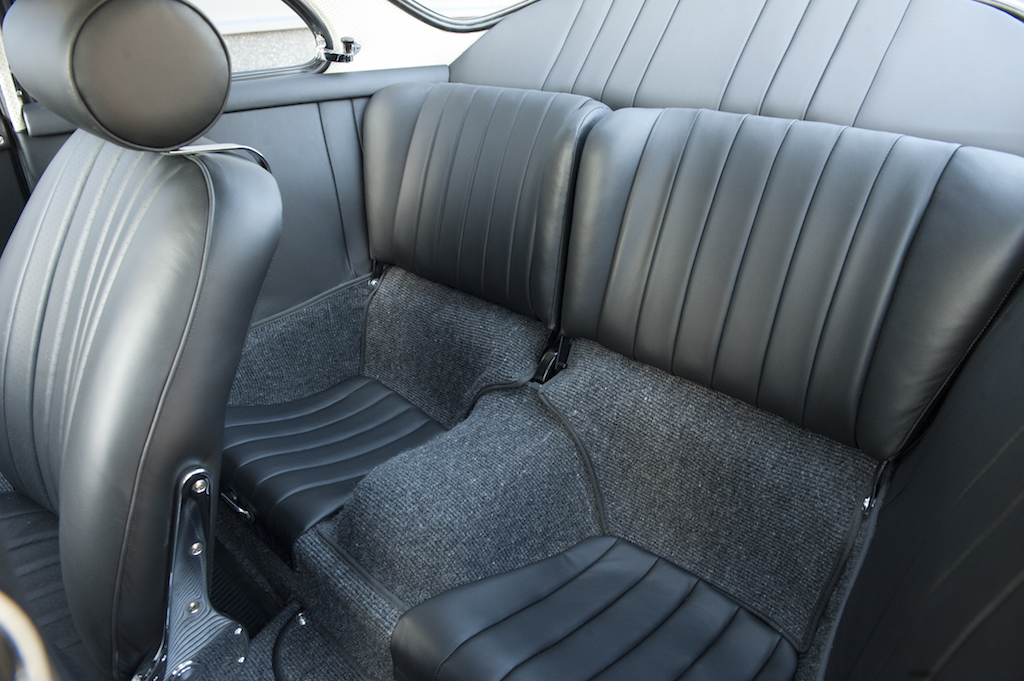
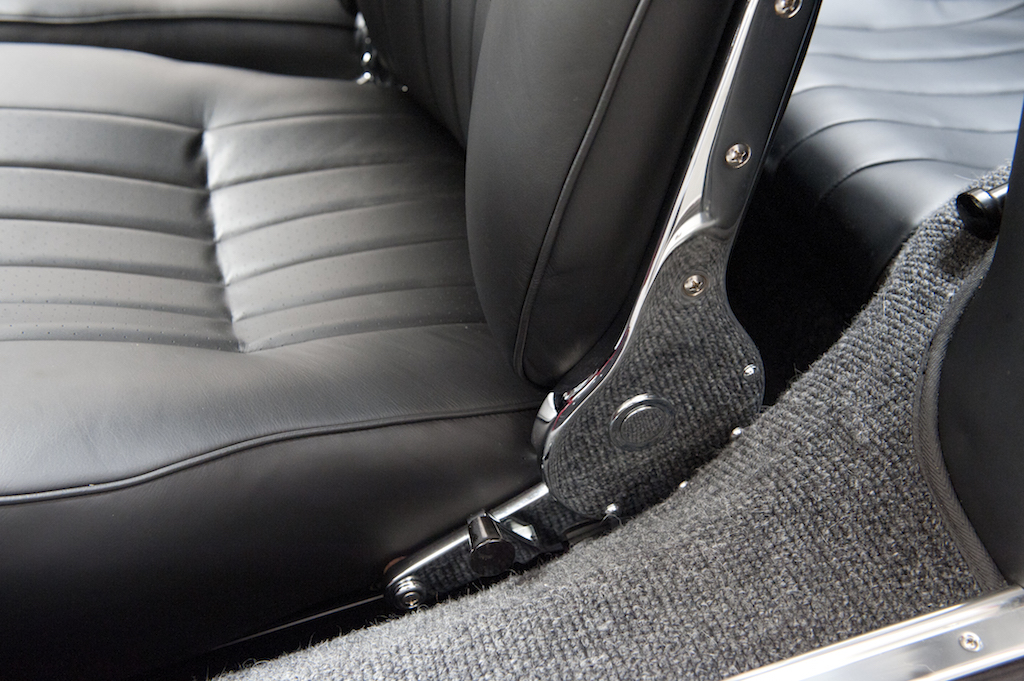
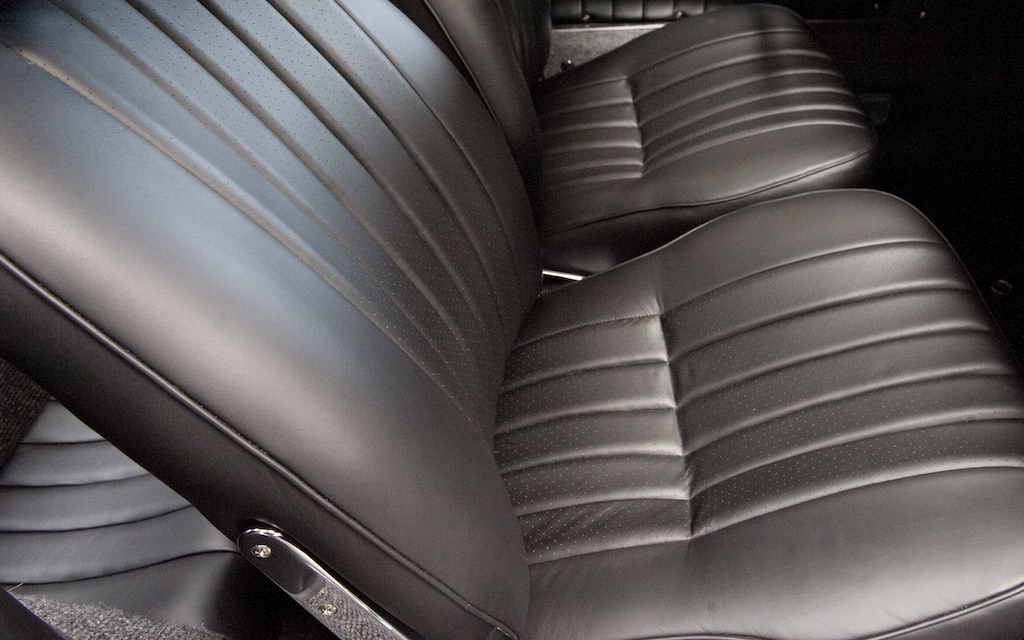
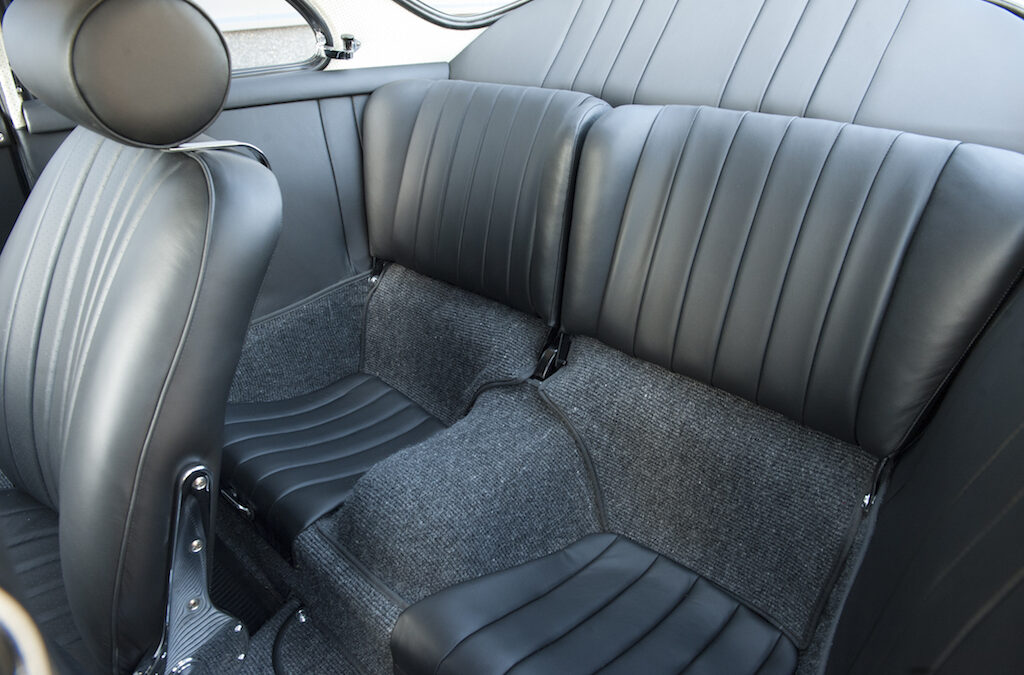
Commissioned by our CRCS b.v., we were able to make the entire interior to measure in this fantastic Porsche 356 S90, taking originality as our starting point. A beautiful black Nappa leather was chosen for the seats and panels, the original Haargarn bouclé carpet in dark grey, and an original white headlining.
The car won second prize at the Concours d’Élégance in Knokke.
History:
The 356 was well born, in the sense that the formula on which it was based, like its shape, remained virtually unchanged throughout the period 1947–1965. Naturally, Ferry Porsche and his colleagues did not let these eighteen years pass unnoticed: the car was modernised in the typically German manner, so that the basic design was continuously refined. Listing every modification carried out over the entire life cycle of the 356 would go too far, but the most important changes can be summarised.
From the very beginning of the 356, the robust steel platform made it possible to build both a coupé and a cabriolet, with a whole series of successful variants on the same base (Speedster, Convertible D, Roadster, Hardtop Coupé, etc.). The first 356 shared many components with the VW production cars, from the engine (its displacement was, however, reduced from the original 1,131 cc to 1,086 cc in order to compete in certain racing classes) to the unsynchronised gearbox, the steering mechanism and a good many interior parts. The most characteristic aspect of the hand-beaten aluminium bodywork was undoubtedly the windscreen, split into two small panes meeting at a V-angle, which arose from the difficulties of the time in producing a curved windscreen. Other details recalling the difficult situation in post-war Germany were the lever dampers at the rear, the rod-operated fuel tap, the fixed rear side windows, and the absence of a fan and a rear seat. Some of the Gmünd cars were in fact built by coachbuilders Tatra, Kastenhofer and Keibl in Vienna; others were sent as bare chassis to the Swiss dealer Von Senger, who had them bodied by Beutler. But the original Porsches were fitted with light aluminium body panels and thus proved capable of excellent sporting performance — their official weight was only a little over 600 kilos.
At the beginning of 1950, production of the 356 began in Stuttgart, with the steel bodies of Reutter, who had become Porsche’s contract partner in 1949. Aluminium panels had become too costly owing to a shortage of raw materials. In 1951 the 500th 356 was produced and the 44 bhp 1.3-litre engine appeared, while the brake drums gained cooling fins, twin brake cylinders were fitted at the front, the oil-temperature gauge made its appearance, and from April the first telescopic dampers were fitted at the rear (replacing the friction dampers).
Model year 1953 was (thanks to technical novelties from 1952) a very important period in the evolution of the 356, with the introduction (following its 1952 presentation) of the American Roadster, the 60 bhp 1.5-litre engine and new instruments. The 356 was considerably improved with a series of new details (new bumpers and shift mechanism, etc.), of which the new windscreen was the most striking — still V-shaped, but now in one piece. In September and October 1952 two new engines made their appearance: the 55 bhp 1500 cc came first, followed in October by the 70 bhp 1500 S. At the same time the brakes were further improved by increasing the drum diameter to 280 millimetres, and the fully synchronised Porsche gearbox was introduced. But an at least equally important change was the appearance of the type 547 engine: the famous twin-camshaft engine designed by Ernst Fuhrmann, driven by shafts and bevel gears from the crankshaft. First shown in the 550 Spyder at the Paris Motor Show in 1952, the 547 was of comparable importance to the engines that were still fitted with pushrods and rocker arms. The 547 was, of course, destined to be fitted in the 356s as well, making the fast Carrera a reality.
Technically, 1953 was a year of reflection: there was only the introduction of a new 1.3-litre 60 bhp “super” engine with a crankshaft running on roller bearings. The year 1954 offered more innovation with the appearance of the legendary Speedster. Originally this was intended as a model positioned at the lower end of the market for the United States: a small, extremely simple sports car with a low windscreen, giving an immediate sense of speed, with a very spartan interior to keep costs down. Meanwhile, the “normal” models received improved seats, instrumentation and equipment levels, the stronger wipers also gained a washer, and powerful Bosch horns were fitted behind the small grilles beneath the headlamps. At the end of the year, new engines with three-piece crankcases were introduced (this concerned only the heavier engines; the 1.1-litre VW engines remained two-piece), as well as an anti-roll bar at the front and other improvements.
Source: Porsche 356 club
www.porsche356club.nl